
Secretary Kody Kinsley on Shared Power and Hope
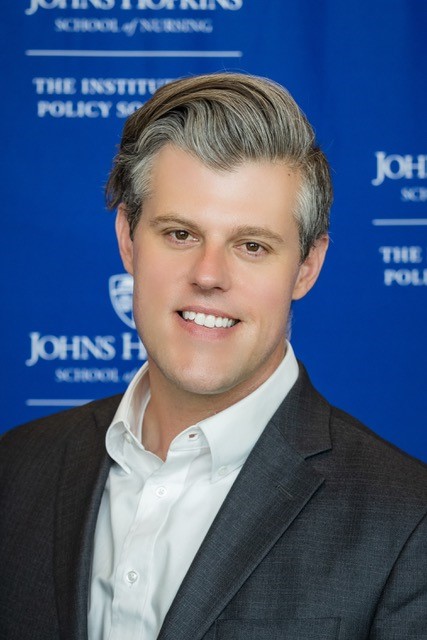
About Kody Kinsley: Kody Kinsley served as North Carolina’s 18th Secretary of Health and Human Services under Governor Roy Cooper, unanimously confirmed by the North Carolina Senate. Throughout his tenure, he focused on making health care more affordable and accessible for all North Carolinians, including those in underserved, overlooked rural areas. Kinsley played a pivotal role in expanding Medicaid through bipartisan collaboration with the General Assembly, resulting in over 600,000 North Carolinians gaining coverage in the first year—twice the expected pace. He secured one of the largest behavioral health investments in state history—$835 million— and major policy reforms to expand access to mental health and substance use services. He implemented North Carolina’s groundbreaking Health Opportunities Pilots — the nation’s first large-scale experiment proving that paying for non-medical health needs, like food and housing improves health and lowers cost. In partnership with all of the state’s hospitals, Kinsley provided $4 billion in medical debt relief for 2 million North Carolinians. His career includes roles at the White House, the U.S. Department of Health and Human Services, and the U.S. Department of the Treasury, where he was appointed by President Barack Obama and continued under President Donald Trump as Assistant Secretary for Management. Secretary Kinsley currently serves as a Senior Policy Advisor at Johns Hopkins University, Senior Advisor with the Milken Institute, a fellow of the Aspen Institute, and serves on numerous boards. A native of Wilmington, Kinsley is a first generation college student and resides in Raleigh with his partner, where they hike frequently with their dog.
Setting the Scene
Growing up, Secretary Kody Kinsley’s life was shaped by witnessing the inequities and barriers to health care access. Without health insurance, his family often relied on provider sliding fee-scales, community health centers, and prescription drug samples. When his father suffered a stroke, his mother’s first thought was not only about her husband’s recovery, but also how they would ever be able to afford his care. Witnessing these stressors firsthand on the difficulties of navigating systems they couldn’t afford left a lasting mark on Secretary Kinsley, which galvanized his belief that health systems should be more accessible, compassionate, and affordable for every family.
Today, Secretary Kinsley describes himself as someone who loves solving complex problems: “I get a real thrill out of fixing big, broken puzzles… figuring out how to make those things work is still exhilarating to me”. His lived experience gives him both the content and context expertise to start putting together the complicated puzzles in public health, social services, and behavioral health. For him, real solutions must be rooted in the voices of those who have navigated these systems firsthand. In this conversation, Secretary Kinsley speaks about how collaborative approaches and shared power are the foundation for building systems that work for all families.
It Takes Everybody
The Johns Hopkins School of Nursing describes Secretary Kody H. Kinsley as one of the nation’s leading health policy experts. He became North Carolina’s 18th Secretary of Health and Human Services under Governor Roy Cooper, a role he was unanimously confirmed to by the North Carolina Senate. Vincent Guilamo-Ramos, PhD, RN, FAAN, praised Kinsley’s approach:
“Kody’s special power is working across partisan divides to find common ground and shape policy and programs that improve the health and quality of people’s lives… He has a track record of recruiting new supporters and building coalitions committed to optimal health for all.”
One of the most visible examples came in December 2023, when North Carolina expanded Medicaid. The UNC School of Government’s ncIMPACT Initiative highlighted how the expansion not only provided health coverage but also created a framework for holistic support at the State level. By coordinating across DHHS, the Department of Commerce, and other partners, the initiative connected physical health with employment, financial stability, and mental well-being.
This multifaceted approach reflected Secretary Kinsley’s belief that complex problems require integrated solutions. By breaking down silos, the State created not just a safety net, but a platform for opportunity, which supports families in multiple dimensions of their lives. As Secretary Kinsley put it: “A key piece of cross-sectoral engagement is engaging with people who disagree… to do good engagement you’ve got to do the hard work to engage across differences. It is the only thing that will make change.”
Seizing “Crisitunity”
In Secretary Kinsley’s work and life, he describes himself as a “silver-linings” person. He is often looking for the good during the challenges. And he frequently refers to these shimmering moments as aa “crisitunity” – a portmanteau of the words crisis and opportunity. On the Re-Think and Re-Tool podcast, he reflected on his team’s work combatting COVID: “… We were able to advance collaborative partnerships that we’ve never had before, we worked with people, connected with folks, built systems that we had never done in the past, we were also able to build data and accountability systems that we’ve never had before.” He illustrates this further by a conversation he recently had:
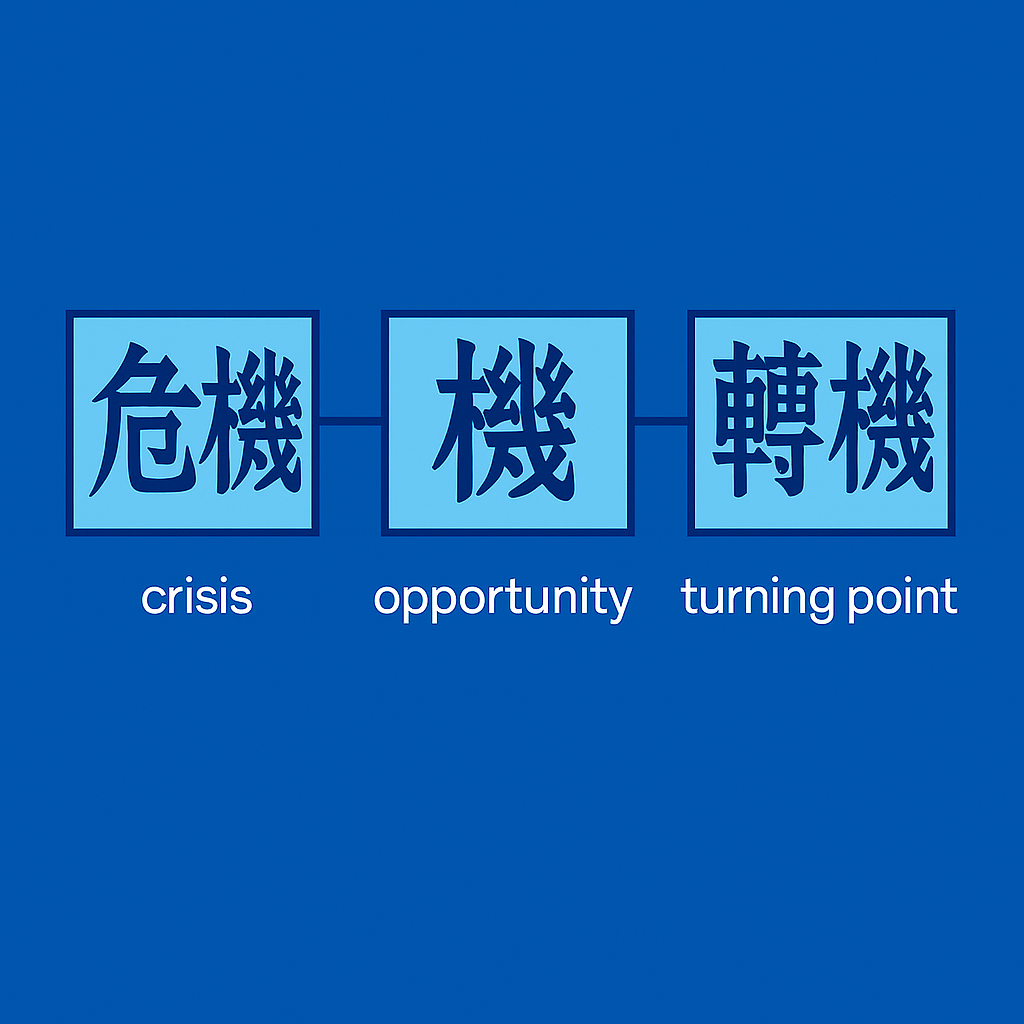
“Earlier this week, I was at a policy symposium with a group of officials from Taiwan, they were visiting the United States, and I was doing a presentation. Something came up that I thought was interesting: The Mandarin characters for Crisis and Turning Point have a common character… Can you guess?”
After a pause, he explained, “It’s opportunity. So, this foundational point that is baked in the bones of a language shows that within crisis and on the path to finding change is opportunity.”
Brookings Institute supports Secretary Kinsley’s point of view, explaining how through crises, new and incredible opportunities can emerge, especially if traditional approaches and paradigms are questioned and challenged. They write, “Crises can get the collective adrenaline flowing, focusing minds to solve the problem at hand.” Secretary Kinsley’s silver lining perspective is truly more than that: it is an actionable mindset that sees difficulties as a door opening for innovation, problem solving, and people coming together for a common goal of improving systems and structures in place. By adopting this viewpoint, professionals enter the world of a growth mindset, where every obstacle is simply a puzzle that hasn’t been solved yet.
Shared Power with Communities
At the heart of Secretary Kinsley’s philosophy is the principle of shared power. Community Wealth Partners defines power itself as “an actor’s ability to influence an outcome,” noting that it can be used both positively and negatively. Too often in social services, power sits in the hands of professionals making decisions about others’ well-being without the opinions of those it affects most. Secretary Kinsley insists on a different approach, in which we are bringing in those from the communities to be a part of the decision-making process. He exemplifies this principle by saying, “If I have a program that is trying to create better conditions for health in rural areas in North Carolina, then it would be smart for me to have some people that do that work and that grew up in rural North Carolina, because they know where to go, know who to talk to, and they know what it’s like.”
This mirrors what the Centre for Public Impact calls the “shared power principle,” in which governments, public sector entities, partners, and individuals all play meaningful roles in shaping policies that affect health outcomes for families. Shared power transforms community voices into action, moving away from tokenism and toward authentic, equitable engagement. Kinsley emphasizes that lived experience must be central to policymaking: “There’s also strategies where you can partner with community members or community organizations who have trust, who live in those spaces and you say, you know, can we come and share with you and would you invite us in… their experience is so valuable and we can be at the exact table.”
The Urban Institute underscores that shared power requires professionals to intentionally relinquish control and equip communities with tools to lead. Kinsley has put this into practice. An example of this resulted from COVID-19. Secretary Kinsley’s team launched a geolocation mapping tool to identify vaccination gaps. What started as an initiative evolved into a tool that empowered local groups to respond: “It was not only the measure of success, but also the tool that initiated the action,” he explained. By making data public and then giving the tool to communities, DHHS enabled communities to collaborate directly, removing the State as a bottleneck, while still providing direction and acting as a resource. “The government plays a role… highlighting key data and other pieces of information that help people navigate how to do that in a collaborative way.”
Secretary Kinsley also stresses that authentic engagement requires openness: “Engage with people deliberately and build an inclusive environment. So, ask for feedback, try things out, pilot it, you know, be willing to be wrong, present different ideas and give different paths for folks to give you feedback.” And, critically, consistency: “We’ve got to do a better job at making sure that [the public] understand how we engage and that we do it reliably and consistently so they can more easily plug in.”
Looking Forward with Hope
Despite the complexity of the systems he manages, Secretary Kinsley returns again and again to a single guiding principle: hope. “I think in this moment there’s probably no ingredient more important to look for, to find, to support, and try to bring yourself into this situation,” the Secretary remarked. “Hope is foundational to change. And I believe there still remains a lot to be hoped for.” (In The Institute for Family’s Lightbulb Moment North Carolina Has Hope, we include some actionable strategies to incorporate hope into practice.)
Secretary Kinsley shows us that hope is an active commitment to see opportunity in crisis, to engage across differences, and to share power with communities. His story, from a child navigating health inequities, to a national leader shaping holistic solutions, reminds us that progress is always possible when people come together with honesty, trust, and a wholehearted belief that every family deserves to be happy and healthy.
From the Expert Insights Series: