
About the Expert Insights Series: The success of families depends on many stakeholders coming together to understand and respond to the complex needs of families. With so many facets of family well-being and endless commentary on topics, it can be difficult for professionals to find the reliable, relevant information they need to make informed decisions and stay current on key issues.
That’s why we created the Expert Insights Spotlight. This is a space where we talk to trusted experts across the many fields that contribute to flourishing families. These conversations offer actionable insights and digestible advice for professionals, advocates, and anyone working to support family well-being.
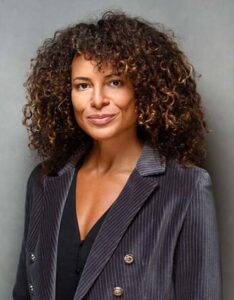
Meet the Expert: April Dinwoodie is a writer, speaker, coach, and consultant who brings a powerful voice to conversations about adoption, identity, and race. As a Black and biracial adoptee raised in a white family, she draws from personal experience to guide individuals and organizations in navigating complex issues surrounding adoption. She is the host and founder of the podcast Born in June, Raised in April: What Adoption Can Teach the World!, and her work has been featured in CNN, Bloomberg, The New York Times, and The Atlantic.
Dinwoodie is the part-time Executive Director of Transracial Journeys, former CEO of the Donaldson Adoption Institute, and creator of AdoptMent, a mentoring program for adopted youth. Through her writing, workshops, and public speaking, she is dedicated to helping people build stronger relationships, develop healthy identities, and deepen their understanding of race, class, and culture.
In living rooms and courtrooms across the country, families are forming in beautifully diverse ways. One of the most powerful examples of this is transracial adoption, which Considering Adoption defines as when a child is adopted by a parent of a different racial or ethnic background. Today, nearly 1 in 3 domestic adoptions in the United States are transracial, according to WFAE. While these families often represent deep love and commitment, they also navigate layers of identity, belonging, and cultural understanding that require intentional care and support.
While rooted in love and good intentions, transracial adoption can involve emotional nuance. As April Dinwoodie, a transracial adoptee, writer, and adoption advocate, shares:
“It is possible to be adopted and love your family and also be deeply curious and even mournful about the family you didn’t get to know.”
In this conversation, April highlights key facets of transracial adoption and helps us understand the complexity of these unique situations.
Holding Two Truths
For many transracial adoptees, love and loss exist side by side. Dinwoodie reflects:
“You are welcomed into your adoptive family with their every intention to love and share their lives with you, but there is still space for confusion and questioning... It’s not the same as your birth family. Period. Especially when they don’t look like you.”
The duality of gratitude and grief is common. It’s vital that families and professionals create space for both. Growing up in a family that doesn’t share your racial identity can create confusion. Dinwoodie recalls:
“Nobody in my family was really talking about race or difference. That left me with a sense that either it didn’t matter, or it shouldn’t be talked about.”
Resources like BetterHelp highlight that transracial adoptees may feel disconnected from their heritage, face microaggressions, and struggle with belonging. Dinwoodie adds:
“I thought something was wrong with me... I didn’t understand why people would treat me differently than my siblings.”
Without intentional conversations about race and identity, children are left to make sense of these experiences on their own.
Embracing the Whole Truth
Dinwoodie reminds us that honesty is essential, even when it's uncomfortable:
“The truth doesn’t have to be pretty, but it has to be told.”
Therapist Mari Itzkowitz supports this view, saying, “Information is control.” Open dialogue gives adoptees ownership of their stories, helping them develop a stronger sense of self.
“We have to have the courage and the humility to show up and be in the space of discomfort and tension—and also joy and healing—that comes with the truth,” Dinwoodie explains.
Creating Belonging Through Action
In Dinwoodie’s discussion with the Institute for Family, she weaves in tangible and actionable ways professionals and families can support transracial adoptees and their families. Below, we list out these nuggets of wisdom.
- Start conversations early and revisit them often.
- Provide racial mirrors, which are friends, mentors, and community members who share the child’s identity.
- Invest in culturally informed training and support, such as Transracial Journeys, the summer camp Dinwoodie helps lead.
- Celebrate cultural identity as a core part of the child’s development.
- Honor a child’s curiosity, grief, and joy without trying to fix or silence it.
These steps can create space for children to feel what they need to feel as they navigate and form their identity.
Conclusion
Transracial adoption can be a beautiful experience and transformative journey, but it requires lifelong learning. Dinwoodie’s journey, shaped by both love and challenge, has made her a powerful advocate for equity and belonging. “Everything in my early life and childhood has brought me to this place,” she reflects. The goal is not only to provide a home but to create a space where children can explore, celebrate, and own every part of who they are.
Dinwoodie helps us understand that true belonging isn’t just about being loved, it’s also about being understood, no matter how messy the process is.