
Setting the Scene
Delores Hunt, known to most endearingly as ‘Dee,’ has the type of passion that is contagious. After nearly retiring, Dee felt called to apply for a director’s position at the Rutherford County Department of Social Services. With 44 years of experience in social services, she reflects, “I absolutely adore this work. This work allows me the opportunity to touch someone’s life, to do something to make someone’s life better. What better job is there out there?”
Through more than four decades of working tirelessly to protect and uplift families in North Carolina, Dee knows the value of family: “Family means everything to me, and family should mean everything to everyone. Regardless of what your family makeup is, as long as there’s someone in this world would cares about you and who’s there in times of need, that is family.” This type of commitment and compassion is what has led Dee to never give up on creating solutions for some of the most pressing challenges facing families, including the foster care crisis. In recognition of her creative and forward-thinking leadership, Dee was named the winner of the Institute for Family’s 2025 Family Champion Award for Innovation. Dee’s persistence and her belief in family safety being a pivotal priority in the actions of professionals who help families led her to lead the establishment of the Lighthouse Building D Project in Rutherford County, North Carolina, with the generous support of Dogwood Health Trust.
The Foster Care Crisis in North Carolina
The foster care system in North Carolina is facing an unprecedented crisis. The Foster Family Alliance captured the reality starkly when Executive Director Gaile Osborne wrote in July 2025:
“Today, over 11,000 children are in state custody, but according to the most recent data from Who Cares, there are only about 5,600 licensed foster homes. As a result, many children are placed in counties far from their schools, siblings, and everything else familiar, simply because there aren’t enough foster homes to meet the need. The children who enter care are not broken—but the system that holds them is.”
This imbalance between the number of children in custody and the number of available foster homes leaves many with nowhere to go. In the counties across the state, children are forced to sleep in offices due to the shortage of foster homes and crisis beds (temporary placements that provide immediate care due to urgent circumstances like abuse, neglect, or abandonment).
Dee Hunt knows this reality all too well. “We had all these kids that were sleeping on the floor. I got a written citation for operating my office as a residential dwelling.” For Dee, the citation from a fire marshal came after she and her team tried to soften the impact for children by transforming an office into a dorm-like space so it felt more like home. She explained:
“You are not going to believe this but we have 190 kids in care and about 60 percent of our kids are outside of the county. That means they were disconnected from their schools, their homes, their friends, their teams, their churches… 60 percent of our children. And it’s very, very sad.”
With visible emotion, Dee went on, “When children come into foster care… to have them sleep on the floor is just exacerbating the trauma they have already experienced. Every director, social worker, program administrator… should do everything in their power to prevent exacerbating that trauma. No one should be on the floor at all. Children should be in a house. This is happening in every county—and across the country. We’ve got to do something about this.”
Her words echo not just the crisis for children, but also the strain on the professionals trying to care for them. An article co-published by North Carolina Health News and The Charlotte Ledger described how the shortage of placements forces county social workers to take overnight shifts supervising kids in office, adding another layer of burnout to an already stretched workforce.
Innovation and Persistence
In the field of social work, innovation is more than just new ideas, but more so about creating solutions that are truly people-centered, practical, and deeply responsive to the complex problems that families face on a daily basis. The Wurzweiler School of Social Work describes innovation as finding creative ideas for social issues or reshaping existing approaches to make them more effective. The Organisation for Economic Co-operation and Development (OECD) define social innovation as: “The design and implementation of new solutions that imply conceptual, process, product, or organizational change, which ultimately aim to improve the welfare and wellbeing of individuals and communities.” Similarly, the University of Oxford’s Social Sciences Division identifies the hallmarks of innovation in the social sciences:
- Solving societal challenges with practical solutions
- collaborative systems-based research
- real-world testing
- Co-production
- Strengthening external partnerships
- Securing independent funding
Dee’s work in creating the Lighthouse Project Building D embodies these principles. Her approach has been holistic and collaborative, breaking down silos to address the multidimensional needs of the children and families entangled in the foster care crisis in North Carolina. She recognized that previous solutions were not enough, and she felt compelled to create something better. She wanted a safe, temporary home for children taken into the Department of Social Services in her county.
Innovation, however, is rarely straightforward. The essential ingredient for ideas to transform into action and sustainability is persistence. A Forbes article described persistence as a defining characteristic of successful solutions, explaining that “winners continue to win” because they analyze failures, adapt solutions, and press forward with determination.
Dee lived this truth. She said, “It takes one yes. Just one yes after the first 10 no’s. Persistence is the best adjective I can describe for someone that wants to make a difference. You’re going to get no’s—but it only takes one yes.” She shared that she got that one yes by never giving up on the vision. “I kept telling the story everywhere I went, begging people to become foster parents, asking people if they could take a child for even two or three days. I just wanted them off the floor,” Dee remarked with tears in her eyes. Due to her determination and persistence, her vision was able to become a reality. Dee shared her vision when this all began: “I see a house on campus. I see a playground beside it. I see it fenced in… It is everything that we asked for and more. I’m still pinching myself—it was the dream, the vision came true.” Below are some photos Dee shared of the Lighthouse Building D project:
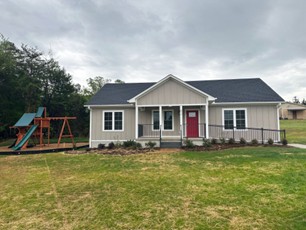
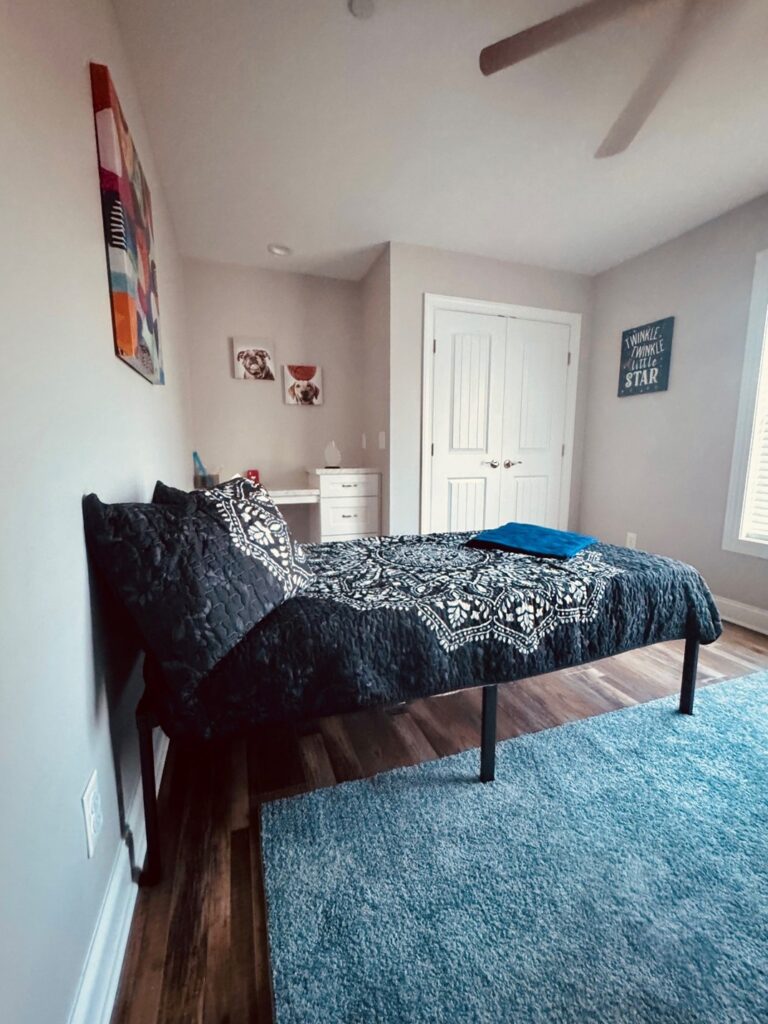
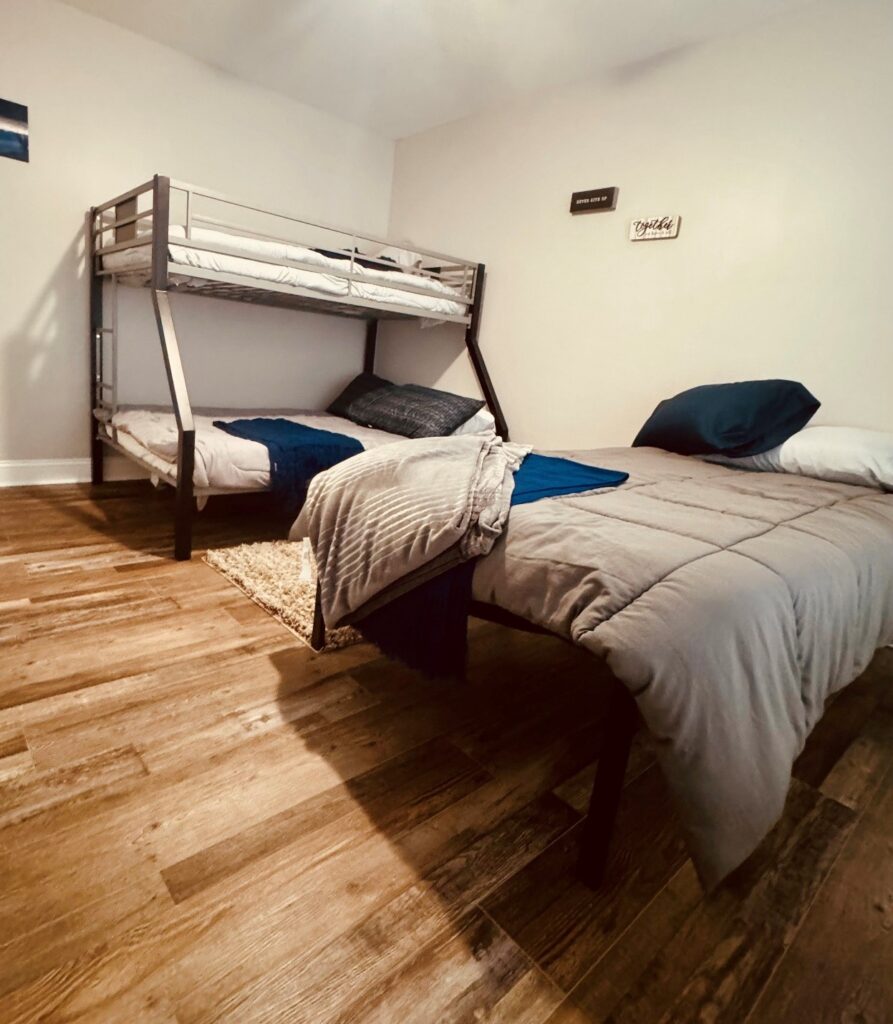
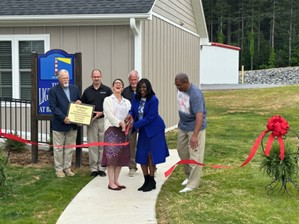
This persistence mirrors the very symbol of the Lighthouse, a beacon resilient against storms, erosion, and even relocation. In July 2025, Governor Josh Stein proclaimed August 7th as National Lighthouse Day in North Carolina, honoring lighthouses as part of the state’s cultural identity and heritage. Their endurance serves as a metaphor for Dee’s vision: persistence rooted in legacy and resilience. It is this same spirit that inspired the naming of the Lighthouse. Like its namesake, the Lighthouse stands as a guiding prsense in times of uncertainty, offering hope and safety to those children in care navigating difficult transitions.
The Power of Community Partnerships
Dee knew the establishment of the Lighthouse would not be possible without the collaboration of those who also bought into her vision. Dogwood Health Trust played a key role in the development, providing a $465,000 grant for the house to be built. In addition, community members and stakeholders allowed resources and support for the house to be built and sustain it. For example, Dee accounts that a senior center director reached out and said that some of the residents wanted to help out: “She said some of them have a lot (to give) and want to share. She asked me ‘what do you need?’ I told her anything that helps us sustain things is imperative. They are doing a project where we don’t have to worry about cleaning supplies or any of those things for a long time.” Sustaining a project like Lighthouse at Building D requires multifaceted support; even contributions that may seem small, like cleaning supplies, are essential to keeping the vision alive and the house thriving.
Dee continued by saying, “I’m on several boards—the YMCA board, the United Way board, the Health Council board, the housing board—and at the end of every meeting I would say: we need a house for our children. That’s how partners came forward.” She continues by saying, “Because I talked so much about it everywhere I went, we now have a church who has adopted the Lighthouse, a senior center providing supplies, and community partners who stepped forward. Collaboration is what made this real.”
Her position also gave her the ability to act on ideas that might never have moved forward otherwise: “What I love about this job is that I do get a chance to make some things happen that I would have ideas for that would never move when I was in another role.” By weaving her vision into every space she occupied, Dee mobilized a coalition of support that turned an idea into a tangible resource for children in need. The Lighthouse Project’s birth from deep community engagement exemplifies how no innovation happens in isolation.
Sharing the Model Beyond Rutherford County
Dee’s collaborative spirit reaches beyond serving just her county. For Dee, the Lighthouse Project was never meant to be confined to one county. She is determined to share what she has learned with others, helping them build similar solutions for their children they serve. She elaborated by saying, “My whole vision right now is to help other counties get a house on their campus… I said I will come over and I will tell you exactly what I did, and I will share it so that you can get started on this so that you can have one too.” Dee knows that innovation should not be confined but should be shared with those who are already affected by the issue it is trying to address. It is important to her that, “Rutherford County isn’t the only one.” She shares yet another dream: “It is important for me that all children—across North Carolina and across the country—never, ever, ever have to sleep on an office floor.” When professionals share successes and work through deficits together, it creates a narrative that we all have a responsibility to be better and do better for the families we serve.
Conclusion
Now, every day, Dee sees that house. She sees that playground. Her dream to step up for the children in Rutherford County is now a lived reality. Delores ‘Dee’ Hunt’s story is one of persistence, innovation, and a profound heart that was meant for this type of work. She embodies what it means to see even the toughest problems as an opportunity to think outside the box and “always go higher and deeper and farther than you think.” She stands on this quote by seeing the toughest problems as an opportunity to think outside the box. Dee knows progress doesn’t have an end when it comes to serving families: “You can’t stop working just because something helps right then. You’ve go to keep moving.”
She recognizes this work has been possible through the role of faith and support by wrapping up saying, “I am just deeply grateful to my relationship with God, the DSS Board of Directors, the county manager, and Dogwood Health Trust whose support and approval made the Lighthouse possible.”
Through persistence, innovation, and collaboration, Dee Hunt has transformed the way foster care is imagined in her county and embodies what it means to make your job into your purpose. Through the Lighthouse Project, she is ensuring that children in Rutherford County, and hopefully eventually across all other 99 counties in North Carolina, have not only a safe place to reside, but dignity and care.
From the Expert Insights Series: